Kids' Electronics Compliance: Toy Safety, Batteries and Thermal Paper for AI Printers
Is your product a toy? Which standards apply in the EU, UK and US, how to handle batteries and thermal paper, and how to build a test plan that won't stall your launch.
Key takeaways
- The first decision is classification. If the product is designed or intended for play by children, toy-safety law applies on top of electronics rules.
- For electric toys, expect EN 71 + EN 62115 in Europe and ASTM F963 + CPSIA (with third-party testing and a Children's Product Certificate) in the US.
- Batteries, button cells, small parts and cutters are recurring problem areas. Design them out early.
- Use BPA-free (ideally BPS-free) thermal paper. The EU has restricted BPA in thermal paper since 2020.
- Connected products also need radio compliance and, in the EU, the RED cybersecurity requirements.
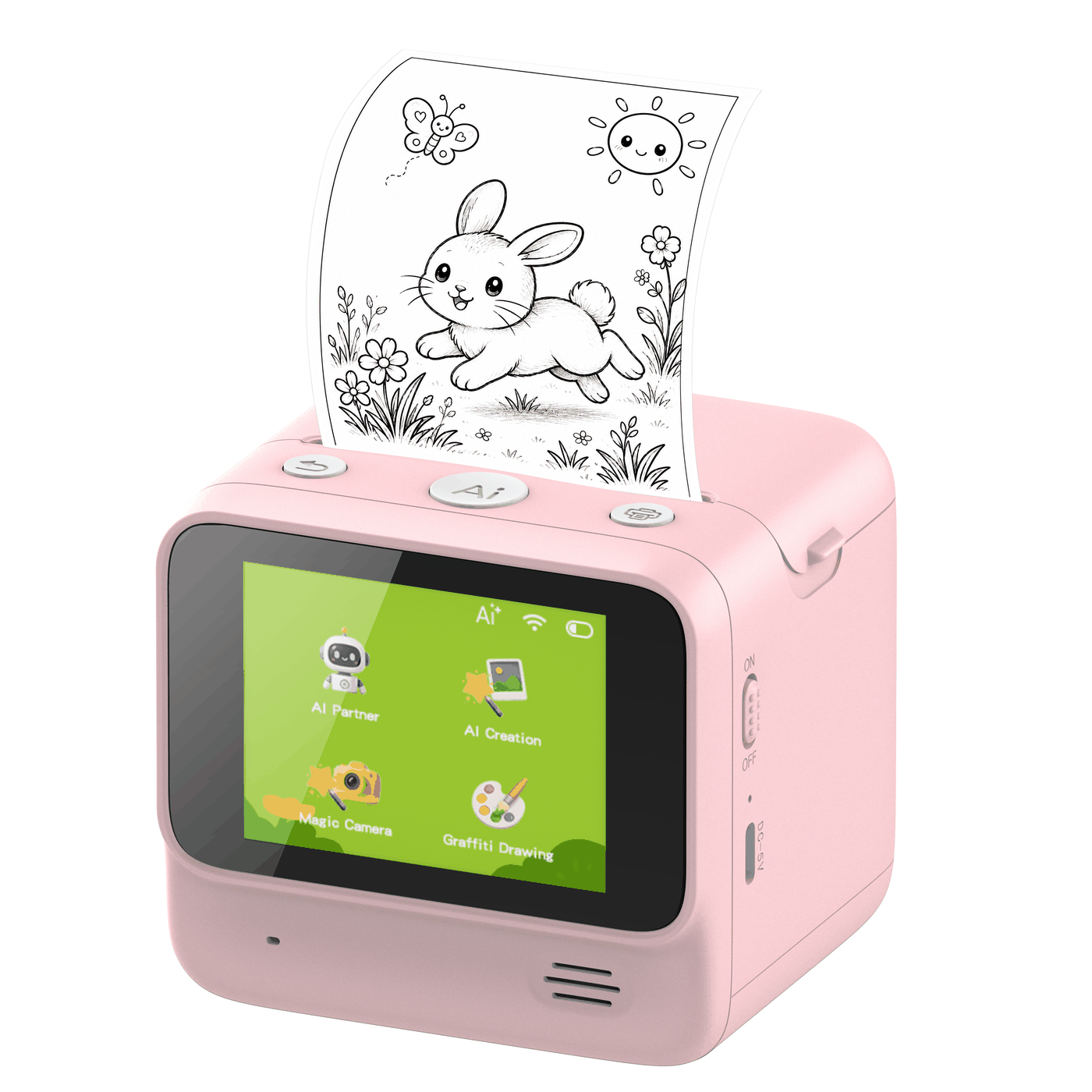
Kids' electronics sit at the intersection of several regulatory worlds: toy safety, electrical safety, radio equipment, chemicals, batteries and, for connected devices, privacy and cybersecurity. The rules aren't impossible, but they are unforgiving if discovered late. A failed test after mass production can mean re-tooling, relabelling or a lost season. This guide gives brands a roadmap, using a kids AI drawing printer as the example.
1. Is it a toy?
In the EU, a toy is a product designed or intended, exclusively or not, for use in play by children under 14. US law similarly treats "children's products" as those designed or intended primarily for children 12 and under. Classification depends on the design, marketing, packaging, age grading and how the product is typically used, not just the label you choose.
A colourful AI drawing printer with a cartoon character, sold in the toy aisle and marketed for kids, will almost certainly be treated as a toy or children's product. A neutral desktop label printer marketed to adults would not. Decide deliberately, document your reasoning, and make the packaging and marketing consistent with it.
2. European Union
| Area | Typical requirement for an electric toy |
|---|---|
| Toy safety | Toy Safety Directive 2009/48/EC with EN 71-1 (mechanical/physical), EN 71-2 (flammability), EN 71-3 (migration of certain elements). A new EU Toy Safety Regulation has been adopted and will replace the Directive after a transition period, so plan ahead. |
| Electrical safety of toys | EN IEC 62115 (electric toys), which also covers batteries in toys |
| Radio (Wi-Fi/Bluetooth) | Radio Equipment Directive 2014/53/EU, e.g. EN 300 328, EN 301 489 series |
| Cybersecurity | RED delegated requirements apply since 1 August 2025 to internet-connected radio equipment and to toys/childcare equipment with radio (EN 18031 series) |
| Chemicals | RoHS for electrical parts; REACH (including SVHC and Annex XVII restrictions such as BPA in thermal paper) |
| Batteries | EU Batteries Regulation (EU) 2023/1542: labelling, and end-user removability requirements for portable batteries from 18 February 2027 (with exceptions) |
| Market surveillance | GPSR obligations, EU responsible person, traceability, CE marking, declaration of conformity |
The UK follows a similar structure under its own regulations (UK Toys (Safety) Regulations, UKCA or CE where accepted).
3. United States
- ASTM F963: the mandatory toy safety standard, adopted as a CPSC rule. It covers mechanical hazards, battery-operated toys, small parts and more.
- CPSIA: limits on lead in substrates and surface coatings, phthalate limits for plasticised parts in toys, mandatory third-party testing at a CPSC-accepted lab, and a Children's Product Certificate (CPC).
- Tracking labels: permanent marks on the product and packaging identifying manufacturer, date and batch.
- Small parts and age warnings: choking-hazard warnings where required for products intended for young children.
- Button and coin batteries: Reese's Law (16 CFR 1263) sets performance and labelling requirements for products containing these cells.
- Radio: FCC authorisation for Wi-Fi/Bluetooth modules and the finished product.
- State laws: e.g. California Proposition 65 warnings for listed chemicals, including BPA.
4. Design decisions that make compliance easier
| Risk area | Design approach |
|---|---|
| Battery access | Rechargeable cell inside a screw-secured compartment; no loose cells; protection circuitry; certified cells |
| Button/coin cells | Avoid them in children's products where possible; if used, secure the compartment and follow Reese's Law and EN 62115 |
| Paper cutter | Use a tear bar shielded from fingers rather than an exposed blade; check accessibility with test probes |
| Print head heat | Ensure surface temperatures accessible to children stay within limits; thermal cut-off |
| Small parts | Paper-roll spindles, caps and decorative parts must survive use-and-abuse tests without detaching |
| Materials | Specify RoHS/REACH-compliant plastics and coatings; request material declarations from suppliers |
| Charging | Use a compliant adapter, or specify one; safe low-voltage charging circuitry |
5. Thermal paper safety
Thermal paper contains a developer that reacts with heat to create the image. Bisphenol A (BPA) was historically common. Under REACH Annex XVII, the EU has prohibited placing thermal paper containing BPA at or above 0.02% by weight on the market since 2 January 2020. Many suppliers switched to BPS, which has drawn regulatory attention of its own, so many children's brands now specify phenol-free or BPA- and BPS-free papers.
Practical steps:
- Specify BPA- and BPS-free paper in the purchase contract and keep the paper supplier's test report.
- Apply the same specification to refill rolls sold separately, which are often sourced later from a different supplier.
- Communicate it on packaging and listings; parents look for it.
- Remind users that thermal prints fade with heat and sunlight. It isn't a safety issue, but it heads off "faded drawings" complaints.
6. Connected-product obligations
If the printer uses Wi-Fi and cloud AI, add these workstreams:
- Cybersecurity: no universal default passwords, secure update mechanism, protection of personal data in transit and at rest. EU RED cybersecurity requirements apply.
- Privacy: COPPA in the US (with the FTC's 2025 rule update), GDPR and the UK Age Appropriate Design Code. Minimise voice data, explain retention and provide parental controls.
- Content safety: not a codified standard in most markets, but central to brand risk. See our product guide.
7. Building a test plan
- Confirm classification and target markets.
- Ask the lab for a test plan quote listing every standard per market.
- Run a pre-compliance check on prototypes (mechanical hazards, accessible temperatures, radio emissions) before tooling is finalised.
- Test pre-production samples built with mass-production materials.
- Prepare the technical file: test reports, risk assessment, declarations, labels, instructions and warnings in each language.
- Set up batch testing or periodic retesting where required (e.g. US children's product rules).
8. Labelling and documents checklist
- CE/UKCA marking and declaration of conformity (EU/UK).
- Manufacturer and importer/responsible-person names and addresses.
- Age grading and required warnings, in local languages.
- Batch or tracking information on product and packaging.
- WEEE and battery symbols as applicable.
- FCC ID and required FCC statements (US).
- Children's Product Certificate (US) available to retailers and regulators.
9. Realistic compliance timeline
| Stage | Typical duration | Notes |
|---|---|---|
| Classification and test plan | 1–2 weeks | Agree standards per market with the lab |
| Pre-compliance on prototypes | 1–3 weeks | Catches design issues before tooling is frozen |
| Formal testing (toy, electrical, radio, chemical) | 3–6 weeks | Runs in parallel where possible; failures add retest time |
| Technical file and labelling | 1–2 weeks | Overlaps with testing |
| Retailer-specific checks | Varies | Some retailers require their own audits or tests |
Build this timeline into your launch plan from the start. Compliance is rarely the longest step if started early. It is often the longest delay when started late.
10. Common test failures in kids' electronics
- Accessible sharp edges on paper cutters or moulding flash.
- Small parts detaching after drop and torque tests (caps, decorative ears, spindles).
- Surface temperature near print heads or charging circuits above permitted limits.
- Battery compartment that opens without a tool, or cells accessible after abuse testing.
- Chemical migration from paints or coatings above EN 71-3 or CPSIA limits.
- Missing or incorrect warnings, age grading or importer information.
- Radio emissions exceeding limits because of late PCB or antenna changes.
Most of these can be designed out cheaply at the prototype stage. They are expensive to fix after tooling and production.
11. What to expect from your manufacturer
A capable manufacturer of children's electronics should be able to:
- Advise on design choices that simplify toy-safety compliance.
- Provide material declarations for plastics, coatings and paper.
- Support pre-compliance testing with its own equipment or partner labs.
- Supply UN38.3 summaries, SDS and cell specifications.
- Implement tracking labels and batch traceability.
- Control changes to materials and components after testing.
Frequently asked questions
Does an AI drawing printer for kids count as a toy?
If it is designed, marketed or packaged for children's play, regulators will usually treat it as a toy or children's product. Toy-safety standards then apply in addition to electrical, radio and chemical rules.
What is EN 62115?
EN IEC 62115 is the European safety standard for electric toys. It covers electrical hazards, heating, batteries and related risks. It is used alongside the EN 71 series under the Toy Safety Directive.
Is BPA banned in thermal paper?
In the EU, thermal paper containing BPA at 0.02% by weight or more has been restricted since 2 January 2020 under REACH. Many brands also avoid BPS and choose phenol-free paper for children's products.
Do I need third-party testing in the US?
For children's products, yes. Testing must be done by a CPSC-accepted laboratory, and the importer or manufacturer issues a Children's Product Certificate based on those results.
Talk to a factory engineer
Send us your target market, quantity and customization needs — we reply with a quotation, sample plan and certification checklist within 24 hours.
Request a Quote Browse Products